
Effects of Spanking: Four Harmful Results No One Talks About

Sarah R. Moore • December 5, 2023
Effects of Spanking: Four Harmful Results No One Talks About
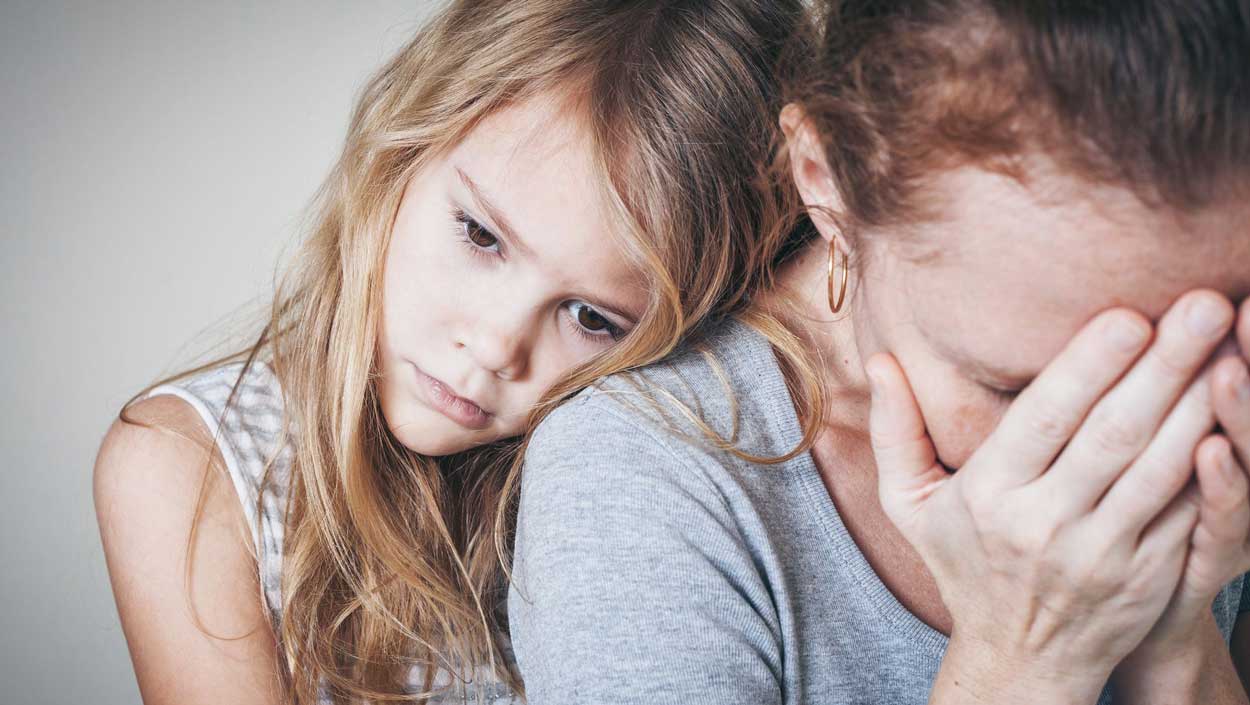
Spanking is associated with a myriad of serious potential risks, including harm to the brain, embodied trauma, developmental delays and damaged relationships.


Studies from the University of Texas at Austin and the University of Michigan who researched 150,000 children over a 50-year period show that spanking is linked to mental health problems, aggression, antisocial behavior, cognitive difficulties, low self-esteem, and substance abuse – and no positive outcomes.

While different studies report a varied percentage range of adults who view spanking as appropriate (between 70-80% of Americans), we know from our work here at The Jai Institute for Parenting that there are still far too many parents relying on this harmful practice. 


So what's going on?


Why is spanking a "go-to" to address kids’ behavior in the first place, and if it’s so bad, why is no one talking about it?


What Are the Effects of Spanking?

Spanking harms the brain


The effects of spanking include a decline in children's mental health; their brain literally can't function as well as it otherwise would. When a child is spanked, their brain is flooded with the stress hormones, cortisol and adrenaline, which over time delay brain maturation. 


These chemicals also create dependency. Meaning there is an addictive nature to the “rush” that comes (perhaps you can relate to this “need for speed”). This leads to risk-seeking behaviors and health implications that reach far beyond childhood. 


A child's mental health, damaged by spanking, is not easy to recover once the relationship has suffered. Even a decade later, a child who was spanked only as a toddler may still be suffering the repercussions. Furthermore, their behavior may actually deteriorate years later as a direct result of their prior corporal punishment!


The brain simply isn't the same after spanking. It can't be, because the spanking has altered it.


The American Academy of Pediatrics released a policy statement on spanking: “Corporal punishment – or the use of spanking as a disciplinary tool – increases aggression in young children in the long run and is ineffective in teaching a child responsibility and self-control. In fact, new evidence suggests that it may cause harm to the child by affecting normal brain development. Other methods that teach children right from wrong are safer and more effective.”

Spanking creates trauma within the body


Many parents believe that once the crying has stopped, the emotional effects of spanking have essentially worn off and that the child has “gotten over it.”


Perhaps surprisingly, just because the child has stopped crying, that does not mean that the body has forgotten what happened. To the contrary, the very opposite is true. The body stores the experience as trauma that may last for years beyond the actual spanking. 


Further, it sets up the child for future and ongoing trauma – research shows spanking children is as serious as other adverse childhood experiences for associated behavior problems and future trauma risk.


Do all children who are spanked end up with significant lifelong trauma? Not necessarily, but the odds are indeed stacked against them. The adult has
no way to know to what extent the child will suffer, even if the adult perceives the punishment to be mild.  

Spanking slows development


Children who are spanked suffer the fear of being hit, smacked, swatted, or any of the other terms adults use to mean spanking. This fear is in direct opposition to children’s growth; in fact, it's a strong force against it. 


Because children who are spanked fear the repercussions of their mistakes, bad choices and failures, they will understandably do their best to keep these from their parents, meaning they’re left to their own devices to figure things out, rather than being able to receive guidance and teaching from their parents. 


The effects of spanking, resultantly, are that the child’s IQ and development slow to a lower rate than the child would otherwise experience. 


Some parents argue that spanking only when their child is very young, or only when the parent is no longer angry, is an acceptable way to use corporal punishment. Science disproves that.


There’s no situation, ever, when spanking doesn’t provide far more negative and damaging consequences than the sometimes perceived “win” of changed behavior. Spanking is effective at coercing short-term results. But the long-term implications just aren’t worth it. 


Delayed development doesn’t make exceptions for when the adult argues “I was spanked and I turned out “fine.”

Spanking damages relationships


Kids are literally wired to pursue connection with their trusted adults. We see it from the first moments of the child’s life where they seek the warm embrace of their mother, searching for her eyes and her breast. 


As they grow, kids will continue to try to connect with her no matter what – even if it’s damaging to their well-being. (Needless to say, spanking isn’t exclusive to mothers; the point is that children biologically and naturally crave their primary caregivers’ love, no matter who it is.) They are wired to maintain connection, even when the connection is unstable or unsafe.

Our kids don’t love us less when we hurt them, they love themselves less.

Relationship frameworks are created from children’s primary caregivers. So if love “hurts,” this is the model for future relationships that our children will have, until and unless they do the work to create a new framework. 


The outcomes are clear: children who were spanked are far more likely to develop codependent relationships as adults (needing to act a certain way to “keep” love) or to continue the cycle and use their power to control other people.


If spanking is so bad, what should I do to control my child’s behavior? 


If you’re a parent, you know firsthand that parenting is just plain hard sometimes. Even the most gentle, peaceful parent can have days (ahem, weeks) where they want to throw in the proverbial towel. 


We know that kids’ behavior – be it toddler tantrums, parenting an angry child, or anything else the child brings to the relationship – can be incredibly triggering. Not to mention, we have to manage whatever of our own “stuff” we might be dealing with. Especially if we’re exhausted or otherwise low on emotional resources, we want to make our lives easier, not harder! 


That desire for things to be easy is completely normal


However, while spanking kids might seem to get us the behavior we desire – the effects of spanking simply aren’t worth it.


There’s another way. 


Believe it or not, with practice, the “other way” actually becomes much easier than spanking. Even better, it produces much better results for both parent and child.


Consider These Reasons Parents Spank – and Their Counterpoints

Parents spank for many reasons.


Some parents learned to spank from their family of origin.

Consider: Our history doesn’t need to be our destiny. There’s a path forward.


Some parents may misunderstand child development and appropriate discipline methods to match that development.

Consider: Resources are available to support adults in learning about what children need at various stages. 


Some parents wonder how to punish a child if they’re not spanking them.

The answer might surprise you.


Punishment isn’t necessary. Teaching is – but not punishment


If you wonder, “How will kids know they’ve done something wrong if they don't feel the pain of some sort of consequence?” Further, you might wonder “Do you mean that I should go from spanking to...nothing? How is THAT going to work?”


Peaceful parenting is not permissive; children do need boundaries. The difference lies in a connection-based relationship with realistic consequences, parenting without punishments. Many parenting support resources can offer you ideas about everything from empowered discipline methods to anger management strategies.


Indeed, consequences do exist in gentle parenting – but not in the way many parents realize. Be it for toddler discipline or working with an older child, the consequences applied in peaceful parenting have no-long term negative outcomes, and are still highly effective teachers.


Positive, empowered parenting requires a reframe from wanting children to behave because they’re afraid of what might happen if they don’t, to parenting them in a way that helps them naturally want to collaborate with their caregivers.


It requires a shift from violence, which is anything that causes physical, emotional, or spiritual harm – to non-violent and empowered communication strategies.


Indeed, it’s a major shift. It’s also completely within your reach, no matter your history. 


And it's never too late.


Some parents might wonder if a connection-based relationship where adults and children mutually want to do well for each other is even possible. 


I invite you to be open to the idea that it is possible. I also invite you to, with an open mind and an open heart, consider the possibilities of what that connection might feel like.


Repair and recovery are always possible.


The negative effects of spanking may be manyfold, but so are the positive effects of healing.


Parent Coaching is a Path to Harm Reduction for Children


If you’re reading this article because you see the harm to children caused by punitive and harsh parenting, and you want to help parents to discover alternatives, becoming a parenting coach is something to consider! 


Jai's parenting coach certification program gives parents a new level of empowerment; it changes lives permanently for the better. Ultimately, becoming a parenting coach gives you the ability to practice advocacy for children, by allowing parents to realize that we do not need to hurt our children to raise them well.


The Ultimate Guide to Parent Coaching

  • Gain incredible insights, integrate valuable perspectives and learn new ways of seeing and understanding the world.
  • Learn new coaching skills, which are applicable in all of your relationships, personal and professional
  • Build a business you love, that gives you freedom, flexibility and extra income for your family
FREE DOWNLOAD >>

Meet Your Author, Sarah R. Moore

Sarah R. Moore is the author of Peaceful Discipline: Story Teaching, Brain Science & Better Behavior, the founder of Dandelion Seeds Positive Parenting, and a Master Trainer for the Jai Institute for Parenting. She's a public speaker, armchair neuroscientist, and most importantly, a Mama. She's a lifelong learner with training in child development, trauma recovery, interpersonal neurobiology, and improv comedy. She helps bring JOY, EASE, and CONNECTION back to families around the globe. Her work has been featured internationally in print, online, on the radio, and on TV. Follow her on Instagram, Facebook, YouTube, TikTok, Pinterest & Twitter.


READ MORE:

By Maggie Pouplis June 3, 2026
Almost every parent experiences this more than once. Your child changes, and suddenly, you feel like you no longer fully understand them. The toddler who melts down over the “wrong” cup. The once easygoing school-aged child who suddenly becomes more sensitive, withdrawn, or reactive. The teenager who pulls away just when you feel the strongest urge to protect them. And somewhere in those moments, most parents begin searching for explanations. “Something changed.” “Someone is influencing them.” “They’ve become difficult.” “Social media is ruining this generation.” As parents, we naturally try to make sense of behavior. We look for causes because uncertainty feels uncomfortable, especially when it involves someone we love so deeply. But many times, what changes first is not the child’s character. It is the child’s developing brain. One of the most important things I learned during my training with the Jai Institute for Parenting was that behavior cannot be fully understood outside the context of relationship, nervous system development, and emotional safety. That perspective stayed with me and eventually led me to dive even deeper into developmental neuroscience and brain development. Because once you begin to understand how the brain develops, it stops looking like defiance, manipulation, laziness, or attitude. The behavior begins to look like development. In the early years of life, especially between ages two and four, children experience emotions intensely while still lacking the neurological maturity to regulate them independently. The areas of the brain responsible for impulse control, emotional regulation, planning, and perspective taking are still under construction. In other words, young children often feel enormous emotions inside very small nervous systems. This is why a toddler can completely fall apart because their banana broke in half or because you gave them the “wrong” spoon. To the adult brain, the reaction may seem dramatic. To the child’s nervous system, however, the distress is real. This does not mean children should grow up without boundaries . It means that in moments of emotional flooding, connection and regulation often need to come before teaching. As Dr. Daniel Siegel often explains, an overwhelmed brain cannot effectively access logic, learning, or problem-solving. The nervous system must first return to a state of safety before true learning can happen. This is where co-regulation becomes incredibly important. Children borrow our nervous systems long before they can consistently regulate themselves. They learn emotional regulation through repeated relational experiences with calm, connected adults. Of course, this does not mean parents must remain perfectly calm all the time. Parents are human beings with limits, stress, exhaustion, responsibilities, and their own nervous systems. What matters most is not perfection but repair, awareness, and the overall emotional climate of the relationship. As children move into the school-age years, something else begins to happen. Around ages five to seven, the social brain expands significantly. Children become increasingly aware of how others see them. Acceptance, belonging, comparison, fairness, and peer relationships begin carrying much more emotional weight. This is often the age when parents say things like: “They suddenly became more sensitive.” “They take everything personally now.” “They worry more than before.” And they are usually right. At this stage, children are not simply reacting emotionally. They are beginning to build a deeper social identity. Their brains are becoming more aware of social evaluation and emotional meaning within relationships. Then comes a stage I personally believe is one of the most misunderstood of all: roughly ages eight to ten. Many parents expect things to stabilize by this point. Instead, some children become quieter, more introspective, more emotionally reactive, or seemingly disconnected. Others become easily bored, frustrated, or emotionally overwhelmed. And naturally, adults begin creating narratives around those changes. “They’re lazy.” “They’ve changed.” “They don’t care anymore.” But very often, what we are witnessing is neurological reorganization rather than deterioration. During this period, the brain begins a major process called synaptic pruning. Neural connections that are not frequently used begin to weaken, while frequently used pathways become stronger and more efficient. At the same time, children develop more complex emotional awareness, deeper thinking, and a richer internal world. Many children at this age begin asking bigger questions about themselves, relationships, fairness, identity, and belonging, even if they cannot fully articulate those thoughts yet. Sometimes what adults interpret as withdrawal is actually cognitive and emotional expansion happening internally. And then adolescence arrives, perhaps the stage that activates the most fear in parents. Teenagers begin separating psychologically from their parents as part of healthy development. Their need for autonomy increases while the emotional and reward systems of the brain become highly sensitive. Peer relationships become deeply important, emotions intensify, and risk-taking often increases. To many parents, this can feel frightening or even personal. But adolescence is not a broken relationship. It is a developmental transition. Teenagers still need boundaries, guidance, and emotional safety. Perhaps more than ever. But they also need space to develop identity, autonomy, and a sense of self outside the parent-child dynamic. And maybe this is one of the biggest challenges of parenting today: learning how to remain emotionally available without trying to control every stage of development out of fear. Modern parenting often places enormous pressure on parents to react perfectly at every moment. But children do not need perfect parents. They need regulated enough adults who are willing to stay curious about what behavior may actually be communicating. Because many times, children are not trying to give us a hard time. They are trying to organize a developing brain and nervous system inside a very overstimulating world. And perhaps the question we need to ask more often is not “How do I stop this behavior?” , but “What might this developing brain be trying to communicate through it?”
How Jai Parenting Coaches Profit From Their Parenting Coach Certification
By Jai Institute for Parenting May 29, 2026
Can you make money as a parent coach? Explore 5 career paths, salary potential, and how certified parent coaches build impactful businesses and careers.
Jaclyn Carlson: Why Burned-Out Working Mothers Are Turning Toward Coaching Careers
By Jai Institute for Parenting May 13, 2026
Discover how Jaclyn Carlson transitioned from corporate burnout to meaningful work as a parenting coach, and why more mothers are turning to parent coaching for purpose, flexibility, and emotional impact.
parenting coach certification vs life coach certification
By Jai Institute for Parenting January 25, 2026
Understand the difference between parenting coach certification and life coach certification. Learn which is right for your career path.
career change: becoming a parenting coach after burnout
By Jai Institute for Parenting January 24, 2026
Discover how mental health professionals find renewed purpose through parent coaching certification.
how parent coaching supports children’s emotional intelligence
By Jai Institute for Parenting January 24, 2026
Learn how certified parent coaches guide families to foster emotional intelligence and resilience in children.
Show More

Share This Article:

READ MORE ARTICLES:

By Maggie Pouplis June 3, 2026
Almost every parent experiences this more than once. Your child changes, and suddenly, you feel like you no longer fully understand them. The toddler who melts down over the “wrong” cup. The once easygoing school-aged child who suddenly becomes more sensitive, withdrawn, or reactive. The teenager who pulls away just when you feel the strongest urge to protect them. And somewhere in those moments, most parents begin searching for explanations. “Something changed.” “Someone is influencing them.” “They’ve become difficult.” “Social media is ruining this generation.” As parents, we naturally try to make sense of behavior. We look for causes because uncertainty feels uncomfortable, especially when it involves someone we love so deeply. But many times, what changes first is not the child’s character. It is the child’s developing brain. One of the most important things I learned during my training with the Jai Institute for Parenting was that behavior cannot be fully understood outside the context of relationship, nervous system development, and emotional safety. That perspective stayed with me and eventually led me to dive even deeper into developmental neuroscience and brain development. Because once you begin to understand how the brain develops, it stops looking like defiance, manipulation, laziness, or attitude. The behavior begins to look like development. In the early years of life, especially between ages two and four, children experience emotions intensely while still lacking the neurological maturity to regulate them independently. The areas of the brain responsible for impulse control, emotional regulation, planning, and perspective taking are still under construction. In other words, young children often feel enormous emotions inside very small nervous systems. This is why a toddler can completely fall apart because their banana broke in half or because you gave them the “wrong” spoon. To the adult brain, the reaction may seem dramatic. To the child’s nervous system, however, the distress is real. This does not mean children should grow up without boundaries . It means that in moments of emotional flooding, connection and regulation often need to come before teaching. As Dr. Daniel Siegel often explains, an overwhelmed brain cannot effectively access logic, learning, or problem-solving. The nervous system must first return to a state of safety before true learning can happen. This is where co-regulation becomes incredibly important. Children borrow our nervous systems long before they can consistently regulate themselves. They learn emotional regulation through repeated relational experiences with calm, connected adults. Of course, this does not mean parents must remain perfectly calm all the time. Parents are human beings with limits, stress, exhaustion, responsibilities, and their own nervous systems. What matters most is not perfection but repair, awareness, and the overall emotional climate of the relationship. As children move into the school-age years, something else begins to happen. Around ages five to seven, the social brain expands significantly. Children become increasingly aware of how others see them. Acceptance, belonging, comparison, fairness, and peer relationships begin carrying much more emotional weight. This is often the age when parents say things like: “They suddenly became more sensitive.” “They take everything personally now.” “They worry more than before.” And they are usually right. At this stage, children are not simply reacting emotionally. They are beginning to build a deeper social identity. Their brains are becoming more aware of social evaluation and emotional meaning within relationships. Then comes a stage I personally believe is one of the most misunderstood of all: roughly ages eight to ten. Many parents expect things to stabilize by this point. Instead, some children become quieter, more introspective, more emotionally reactive, or seemingly disconnected. Others become easily bored, frustrated, or emotionally overwhelmed. And naturally, adults begin creating narratives around those changes. “They’re lazy.” “They’ve changed.” “They don’t care anymore.” But very often, what we are witnessing is neurological reorganization rather than deterioration. During this period, the brain begins a major process called synaptic pruning. Neural connections that are not frequently used begin to weaken, while frequently used pathways become stronger and more efficient. At the same time, children develop more complex emotional awareness, deeper thinking, and a richer internal world. Many children at this age begin asking bigger questions about themselves, relationships, fairness, identity, and belonging, even if they cannot fully articulate those thoughts yet. Sometimes what adults interpret as withdrawal is actually cognitive and emotional expansion happening internally. And then adolescence arrives, perhaps the stage that activates the most fear in parents. Teenagers begin separating psychologically from their parents as part of healthy development. Their need for autonomy increases while the emotional and reward systems of the brain become highly sensitive. Peer relationships become deeply important, emotions intensify, and risk-taking often increases. To many parents, this can feel frightening or even personal. But adolescence is not a broken relationship. It is a developmental transition. Teenagers still need boundaries, guidance, and emotional safety. Perhaps more than ever. But they also need space to develop identity, autonomy, and a sense of self outside the parent-child dynamic. And maybe this is one of the biggest challenges of parenting today: learning how to remain emotionally available without trying to control every stage of development out of fear. Modern parenting often places enormous pressure on parents to react perfectly at every moment. But children do not need perfect parents. They need regulated enough adults who are willing to stay curious about what behavior may actually be communicating. Because many times, children are not trying to give us a hard time. They are trying to organize a developing brain and nervous system inside a very overstimulating world. And perhaps the question we need to ask more often is not “How do I stop this behavior?” , but “What might this developing brain be trying to communicate through it?”
How Jai Parenting Coaches Profit From Their Parenting Coach Certification
By Jai Institute for Parenting May 29, 2026
Can you make money as a parent coach? Explore 5 career paths, salary potential, and how certified parent coaches build impactful businesses and careers.
Jaclyn Carlson: Why Burned-Out Working Mothers Are Turning Toward Coaching Careers
By Jai Institute for Parenting May 13, 2026
Discover how Jaclyn Carlson transitioned from corporate burnout to meaningful work as a parenting coach, and why more mothers are turning to parent coaching for purpose, flexibility, and emotional impact.
Show More

Curious for more?