

My Personal Transformation Through Conscious Parenting

Tania Grinberg • June 10, 2021
My Personal Transformation Through Conscious Parenting
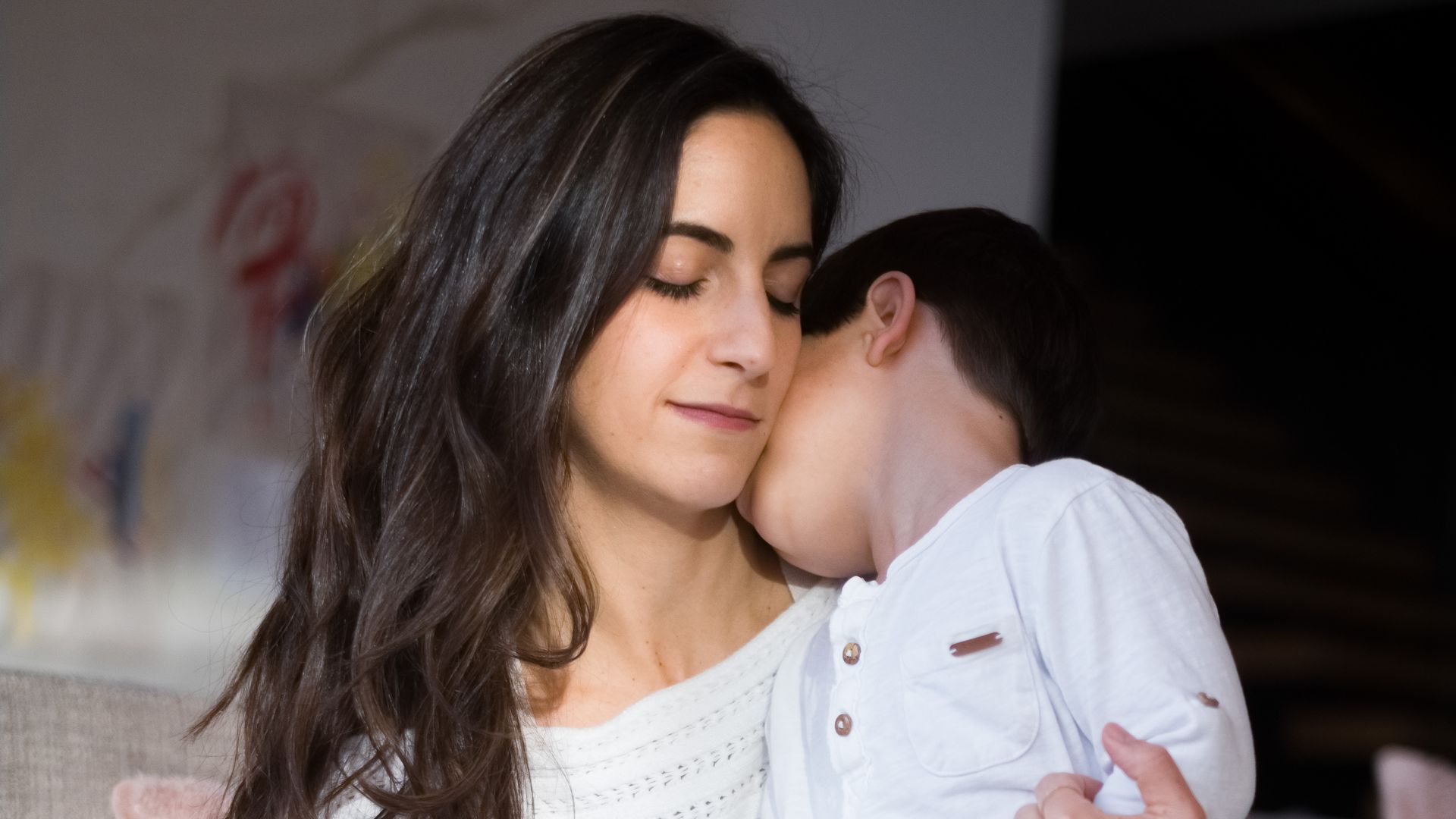
How My Conscious Parenting  Journey Began


When my son was born, I felt an incomparable joy, and at the same time, a deeply rooted fear. For someone who likes to be in control and desired to be a mother so badly and do everything right, motherhood came to me like a shock.


Starting from my birth plan, which did not go as planned, everything that followed felt overwhelming, frightening, and almost violent at times. 


I loved this boy more than anything in the world, and I wanted to be the perfect mother to him.


However, breastfeeding was painful, my body was aching, and there were so many things that terrified me, like SIDS, which kept me from sleeping when I had the opportunity. I did not leave my room for one month, which now sounds to me like I had some mild case of postpartum depression. 

A World of Shoulds and Should Not(s)


I surrounded myself with experts: doulas, breastfeeding consultants, craniosacral specialists, sleep trainers, etc., and these people were terrific, but they also pulled me farther and farther away from my intuition and closer to a world of "shoulds and should nots." 


I experienced my desired maternity as a threat to who I was as a person.


When my child cried, woke up in the middle of the night, refused to eat, or did not want to go to bed, I felt threatened because I believed it meant that I was doing something wrong.


Unfortunately, this belief pulled me away from SEEING my boy for who he was: a sweet baby longing for safety in our connection.


How could I give that to him if I constantly believed I was failing him? 


Covid-19 Came to Stay: Perfectionism and Anxiety 


My daughter came into this world 18 months later, and things with her were easier for sure; I had gone through the newborn and baby phases so I knew what to expect. We signed my son up for daycare, and then my daughter as well when she turned 18 months; suddenly life was beginning to look like it could be manageable again. 


But oh, surprise!! In March 2020, Covid-19 came to stay.


Both kids were at home full time, and we had no family to help or friends to laugh with; I stopped my part-time job, and became a full-time mom to a three and a 1.5-year-old. The fear came back with all its fury.


Once again, I saw myself under a lens of perfectionism, with a deeply rooted fear that I was failing as a mother, and a belief that I was not good enough. 


My perfectionism kept me from meeting my basic needs, which kept me from being calm and present. That caused me to react to my children, which made their behaviors more challenging.


For instance, I would wake up every morning and take them out for a walk without eating breakfast because I couldn’t find time to take care of myself. This would make me irritable and tired, which ended with me yelling at the kids when I became impatient. 


I also insisted on having strict boundaries around sleep that were motivated by a “fear” of spoiling them, which kept me from empathizing with my son when he woke up frightened in the middle of the night. His need for safety and connection during a confusing time was not met by me, resulting in months of sleepless nights and endless battles to keep him in his bed. 


In these months, I had very little tolerance for my children’s crying because I was constantly battling with myself to avoid the tantrums; running lists in my head of what I missed and how I could have prevented their upsets. The self-punishment exhausted me and threw me deep into anxiety.


I felt a lack of control over my life, my children, and my parenting, which forced me to seek control elsewhere. That’s when I started restricting calories – which only made my symptoms stronger because now I was running on an energy deficit. 


While being in the storm of chaos, I also felt heartbroken imagining all the families in far worse situations than me, with fewer means, in smaller homes, without a support system, and with more kids.


If I had such a hard time with my kids at home, what could happen in a harsher family reality?

I Found Light at the End of the Tunnel 


I finally hit bottom and decided to get professional help.


I started talking to a therapist on Zoom; I got myself into a regimen of meditating every morning, I cut out coffee and wine from my diet, I made breakfast an obligation, and slowly I began to let go of control.


The worry turned into action. 


I had to decide whether I would return to finish my Ph.D. in September, which was the end of my maternity leave, and I was baffled about it. I was hunting for a passion and a purpose – when I found it.


What if I could help families find a better way to parent their children? What if I committed to doing the personal work that is required to make my parenting more joyful? 


Then I found Jai. 


I started my Parenting Coach training, and things slowly began to change for me. 


Suddenly I could see my son's sleep habits as a call for connection rather than as misbehavior that needed consequences.


I could hear my daughter's whimpers as a need for me to hold her rather than a noise I needed to distract.


I became more flexible about screen time, knowing when to keep my boundaries (with a loving presence) and when to allow limit pushing. 

A Transformation From the Inside Out 

As my awareness grew, I became more explicit about my own needs, too.


Suddenly my kids wanted more and more of me, and with the overwhelmingness that came with that, I was clear that they were craving to get more of the new mama unfolding. I was playing with them, laughing, and enjoying myself with them, which they couldn’t get enough of. 


Imagine if someone were to give you a new set of glasses with the right prescription for your eyes, and when you put them on, you realized that you had spent so many years not seeing clearly; that's what this transformation is for me. 


It is not perfect, and it's not linear; parenting is a verb, not a noun. 


I'm not a perfect parent; I don't have perfect children, their behaviors and mine are not always congruent. But there is empathy, and there is a DESIRE to understand the why's. 


This journey has returned me to an embodied Tania that was forgotten, and that is where my intuition hid.


My parenting decisions no longer come from fear; they now come from awareness and presence.


That is what our children need from us the most. 


Meet Your Author, Tania Grinberg

Tania Grinberg was born and raised in Mexico City; she now lives in Toronto, Canada. She is the third generation of educators in her family.


Growing up, dinner time conversations orbited around child development, best discipline approaches, and big educational questions. From a very young age, she began teaching and has never stopped since. She has taught all ages, from Early Childhood Education to adults in University.


Tania has a BA in International Relations and an MA in Education. She became a Ph.D. student in Gender Feminist and Women’s Studies, focusing on Maternal Theory and Motherhood Studies. In her 3rd year of Ph.D. she became a mother.


Motherhood helped her find a way into the world of parent education and coaching. She has been a part of the community of Jai Certified Parenting Coaches since 2020. 


Website:
taniagrinberg.com

READ MORE:

By Maggie Pouplis June 3, 2026
Almost every parent experiences this more than once. Your child changes, and suddenly, you feel like you no longer fully understand them. The toddler who melts down over the “wrong” cup. The once easygoing school-aged child who suddenly becomes more sensitive, withdrawn, or reactive. The teenager who pulls away just when you feel the strongest urge to protect them. And somewhere in those moments, most parents begin searching for explanations. “Something changed.” “Someone is influencing them.” “They’ve become difficult.” “Social media is ruining this generation.” As parents, we naturally try to make sense of behavior. We look for causes because uncertainty feels uncomfortable, especially when it involves someone we love so deeply. But many times, what changes first is not the child’s character. It is the child’s developing brain. One of the most important things I learned during my training with the Jai Institute for Parenting was that behavior cannot be fully understood outside the context of relationship, nervous system development, and emotional safety. That perspective stayed with me and eventually led me to dive even deeper into developmental neuroscience and brain development. Because once you begin to understand how the brain develops, it stops looking like defiance, manipulation, laziness, or attitude. The behavior begins to look like development. In the early years of life, especially between ages two and four, children experience emotions intensely while still lacking the neurological maturity to regulate them independently. The areas of the brain responsible for impulse control, emotional regulation, planning, and perspective taking are still under construction. In other words, young children often feel enormous emotions inside very small nervous systems. This is why a toddler can completely fall apart because their banana broke in half or because you gave them the “wrong” spoon. To the adult brain, the reaction may seem dramatic. To the child’s nervous system, however, the distress is real. This does not mean children should grow up without boundaries . It means that in moments of emotional flooding, connection and regulation often need to come before teaching. As Dr. Daniel Siegel often explains, an overwhelmed brain cannot effectively access logic, learning, or problem-solving. The nervous system must first return to a state of safety before true learning can happen. This is where co-regulation becomes incredibly important. Children borrow our nervous systems long before they can consistently regulate themselves. They learn emotional regulation through repeated relational experiences with calm, connected adults. Of course, this does not mean parents must remain perfectly calm all the time. Parents are human beings with limits, stress, exhaustion, responsibilities, and their own nervous systems. What matters most is not perfection but repair, awareness, and the overall emotional climate of the relationship. As children move into the school-age years, something else begins to happen. Around ages five to seven, the social brain expands significantly. Children become increasingly aware of how others see them. Acceptance, belonging, comparison, fairness, and peer relationships begin carrying much more emotional weight. This is often the age when parents say things like: “They suddenly became more sensitive.” “They take everything personally now.” “They worry more than before.” And they are usually right. At this stage, children are not simply reacting emotionally. They are beginning to build a deeper social identity. Their brains are becoming more aware of social evaluation and emotional meaning within relationships. Then comes a stage I personally believe is one of the most misunderstood of all: roughly ages eight to ten. Many parents expect things to stabilize by this point. Instead, some children become quieter, more introspective, more emotionally reactive, or seemingly disconnected. Others become easily bored, frustrated, or emotionally overwhelmed. And naturally, adults begin creating narratives around those changes. “They’re lazy.” “They’ve changed.” “They don’t care anymore.” But very often, what we are witnessing is neurological reorganization rather than deterioration. During this period, the brain begins a major process called synaptic pruning. Neural connections that are not frequently used begin to weaken, while frequently used pathways become stronger and more efficient. At the same time, children develop more complex emotional awareness, deeper thinking, and a richer internal world. Many children at this age begin asking bigger questions about themselves, relationships, fairness, identity, and belonging, even if they cannot fully articulate those thoughts yet. Sometimes what adults interpret as withdrawal is actually cognitive and emotional expansion happening internally. And then adolescence arrives, perhaps the stage that activates the most fear in parents. Teenagers begin separating psychologically from their parents as part of healthy development. Their need for autonomy increases while the emotional and reward systems of the brain become highly sensitive. Peer relationships become deeply important, emotions intensify, and risk-taking often increases. To many parents, this can feel frightening or even personal. But adolescence is not a broken relationship. It is a developmental transition. Teenagers still need boundaries, guidance, and emotional safety. Perhaps more than ever. But they also need space to develop identity, autonomy, and a sense of self outside the parent-child dynamic. And maybe this is one of the biggest challenges of parenting today: learning how to remain emotionally available without trying to control every stage of development out of fear. Modern parenting often places enormous pressure on parents to react perfectly at every moment. But children do not need perfect parents. They need regulated enough adults who are willing to stay curious about what behavior may actually be communicating. Because many times, children are not trying to give us a hard time. They are trying to organize a developing brain and nervous system inside a very overstimulating world. And perhaps the question we need to ask more often is not “How do I stop this behavior?” , but “What might this developing brain be trying to communicate through it?”
How Jai Parenting Coaches Profit From Their Parenting Coach Certification
By Jai Institute for Parenting May 29, 2026
Can you make money as a parent coach? Explore 5 career paths, salary potential, and how certified parent coaches build impactful businesses and careers.
Jaclyn Carlson: Why Burned-Out Working Mothers Are Turning Toward Coaching Careers
By Jai Institute for Parenting May 13, 2026
Discover how Jaclyn Carlson transitioned from corporate burnout to meaningful work as a parenting coach, and why more mothers are turning to parent coaching for purpose, flexibility, and emotional impact.
parenting coach certification vs life coach certification
By Jai Institute for Parenting January 25, 2026
Understand the difference between parenting coach certification and life coach certification. Learn which is right for your career path.
career change: becoming a parenting coach after burnout
By Jai Institute for Parenting January 24, 2026
Discover how mental health professionals find renewed purpose through parent coaching certification.
how parent coaching supports children’s emotional intelligence
By Jai Institute for Parenting January 24, 2026
Learn how certified parent coaches guide families to foster emotional intelligence and resilience in children.
Show More

Share This Article:

READ MORE ARTICLES:

By Maggie Pouplis June 3, 2026
Almost every parent experiences this more than once. Your child changes, and suddenly, you feel like you no longer fully understand them. The toddler who melts down over the “wrong” cup. The once easygoing school-aged child who suddenly becomes more sensitive, withdrawn, or reactive. The teenager who pulls away just when you feel the strongest urge to protect them. And somewhere in those moments, most parents begin searching for explanations. “Something changed.” “Someone is influencing them.” “They’ve become difficult.” “Social media is ruining this generation.” As parents, we naturally try to make sense of behavior. We look for causes because uncertainty feels uncomfortable, especially when it involves someone we love so deeply. But many times, what changes first is not the child’s character. It is the child’s developing brain. One of the most important things I learned during my training with the Jai Institute for Parenting was that behavior cannot be fully understood outside the context of relationship, nervous system development, and emotional safety. That perspective stayed with me and eventually led me to dive even deeper into developmental neuroscience and brain development. Because once you begin to understand how the brain develops, it stops looking like defiance, manipulation, laziness, or attitude. The behavior begins to look like development. In the early years of life, especially between ages two and four, children experience emotions intensely while still lacking the neurological maturity to regulate them independently. The areas of the brain responsible for impulse control, emotional regulation, planning, and perspective taking are still under construction. In other words, young children often feel enormous emotions inside very small nervous systems. This is why a toddler can completely fall apart because their banana broke in half or because you gave them the “wrong” spoon. To the adult brain, the reaction may seem dramatic. To the child’s nervous system, however, the distress is real. This does not mean children should grow up without boundaries . It means that in moments of emotional flooding, connection and regulation often need to come before teaching. As Dr. Daniel Siegel often explains, an overwhelmed brain cannot effectively access logic, learning, or problem-solving. The nervous system must first return to a state of safety before true learning can happen. This is where co-regulation becomes incredibly important. Children borrow our nervous systems long before they can consistently regulate themselves. They learn emotional regulation through repeated relational experiences with calm, connected adults. Of course, this does not mean parents must remain perfectly calm all the time. Parents are human beings with limits, stress, exhaustion, responsibilities, and their own nervous systems. What matters most is not perfection but repair, awareness, and the overall emotional climate of the relationship. As children move into the school-age years, something else begins to happen. Around ages five to seven, the social brain expands significantly. Children become increasingly aware of how others see them. Acceptance, belonging, comparison, fairness, and peer relationships begin carrying much more emotional weight. This is often the age when parents say things like: “They suddenly became more sensitive.” “They take everything personally now.” “They worry more than before.” And they are usually right. At this stage, children are not simply reacting emotionally. They are beginning to build a deeper social identity. Their brains are becoming more aware of social evaluation and emotional meaning within relationships. Then comes a stage I personally believe is one of the most misunderstood of all: roughly ages eight to ten. Many parents expect things to stabilize by this point. Instead, some children become quieter, more introspective, more emotionally reactive, or seemingly disconnected. Others become easily bored, frustrated, or emotionally overwhelmed. And naturally, adults begin creating narratives around those changes. “They’re lazy.” “They’ve changed.” “They don’t care anymore.” But very often, what we are witnessing is neurological reorganization rather than deterioration. During this period, the brain begins a major process called synaptic pruning. Neural connections that are not frequently used begin to weaken, while frequently used pathways become stronger and more efficient. At the same time, children develop more complex emotional awareness, deeper thinking, and a richer internal world. Many children at this age begin asking bigger questions about themselves, relationships, fairness, identity, and belonging, even if they cannot fully articulate those thoughts yet. Sometimes what adults interpret as withdrawal is actually cognitive and emotional expansion happening internally. And then adolescence arrives, perhaps the stage that activates the most fear in parents. Teenagers begin separating psychologically from their parents as part of healthy development. Their need for autonomy increases while the emotional and reward systems of the brain become highly sensitive. Peer relationships become deeply important, emotions intensify, and risk-taking often increases. To many parents, this can feel frightening or even personal. But adolescence is not a broken relationship. It is a developmental transition. Teenagers still need boundaries, guidance, and emotional safety. Perhaps more than ever. But they also need space to develop identity, autonomy, and a sense of self outside the parent-child dynamic. And maybe this is one of the biggest challenges of parenting today: learning how to remain emotionally available without trying to control every stage of development out of fear. Modern parenting often places enormous pressure on parents to react perfectly at every moment. But children do not need perfect parents. They need regulated enough adults who are willing to stay curious about what behavior may actually be communicating. Because many times, children are not trying to give us a hard time. They are trying to organize a developing brain and nervous system inside a very overstimulating world. And perhaps the question we need to ask more often is not “How do I stop this behavior?” , but “What might this developing brain be trying to communicate through it?”
How Jai Parenting Coaches Profit From Their Parenting Coach Certification
By Jai Institute for Parenting May 29, 2026
Can you make money as a parent coach? Explore 5 career paths, salary potential, and how certified parent coaches build impactful businesses and careers.
Jaclyn Carlson: Why Burned-Out Working Mothers Are Turning Toward Coaching Careers
By Jai Institute for Parenting May 13, 2026
Discover how Jaclyn Carlson transitioned from corporate burnout to meaningful work as a parenting coach, and why more mothers are turning to parent coaching for purpose, flexibility, and emotional impact.
Show More

Curious for more?