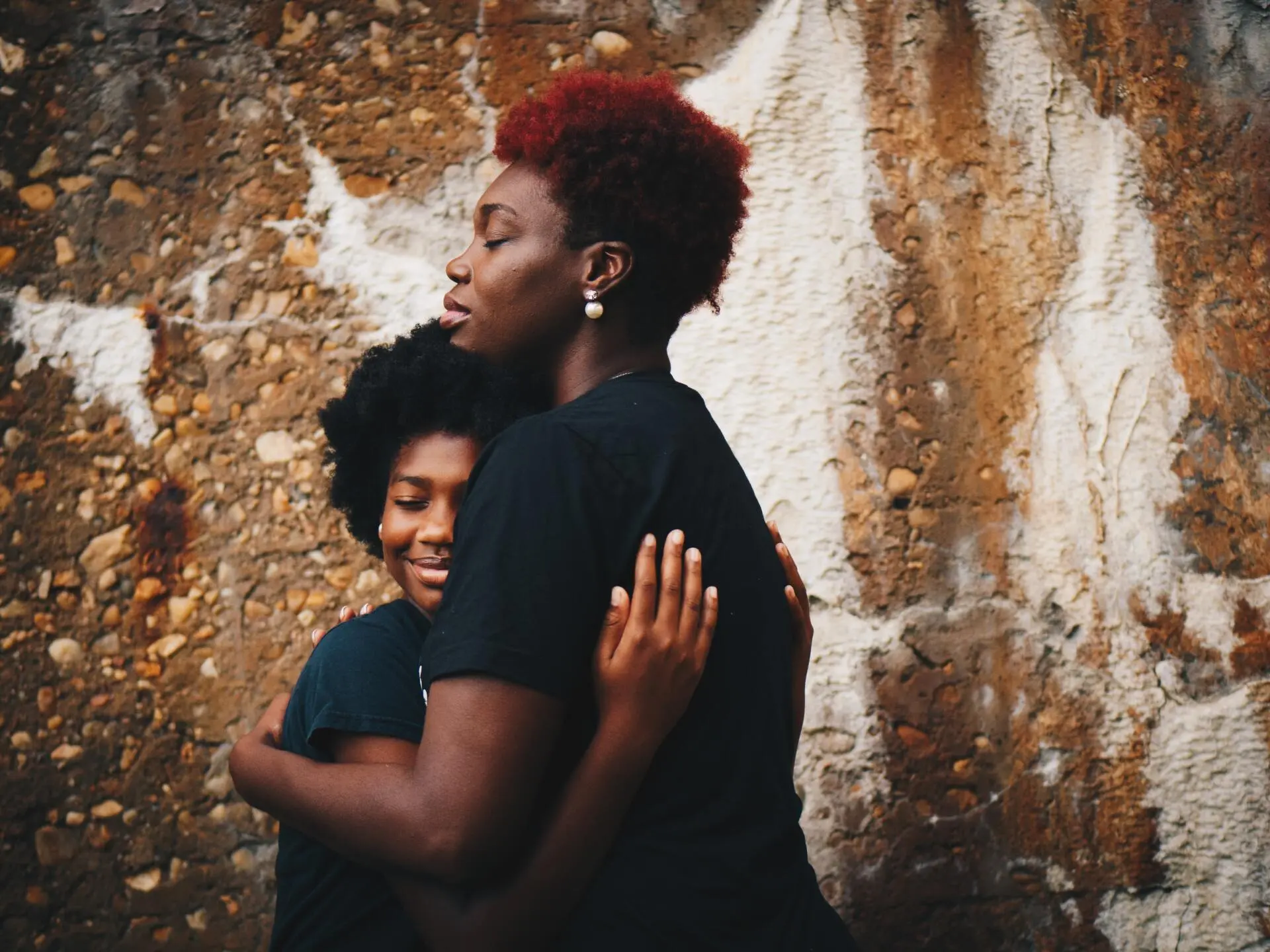

How Does Yelling Affect a Child?

Tasneem Abdelhamid • October 10, 2024
How Does Yelling Affect a Child?

I remember saying, “I will never yell at my kids when I am a parent!” in protest of my parents yelling. Shortly after becoming a parent, I discovered I was being unrealistic and maybe a bit hilarious.


Whether you are a parent who parents positively, gently, and respectfully, or just a parent who tries to get through the day with minimal damage, we ALL yell at one point or another. No matter how many social media reels we watch or articles we read, we still find ourselves yelling at one point or another in our day. We still feel frustration filling up our bodies until we pop like an overinflated balloon.


The question is, why? Why do we yell? Why do we feel our only option is to let out all our frustration and helplessness by yelling to get our children to listen to us? Let’s dig a bit deeper to understand some of the reasons behind yelling.


1. Our own childhood programming


When we are born, and up to 7 years of our early childhood, our brains write our programming based on the environment in which we live. This programming later on becomes our subconscious, which dictates 95% of our actions on a daily basis, and only 5% of our actions happen on a conscious level. This means that if you were yelled at as a child, you’ve been taught that this is the only way to resolve conflict and are highly likely to use the same method with your children, especially during times of stress when your nervous system resorts to ingrained patterns rather than looking for alternatives and changing generational patterns.


2. External stressors affect our nervous system


The more stressed we are, the more our nervous system gets stuck in survival mode. The most important thing to know about survival mode is that it overrides our brain’s ability to think logically. Instead of operating from a place of curiosity and awareness, we then operate from a place of reactivity, fear, and scarcity. 


3. Lack of effective communication tools


Imagine opening all your cans with a knife instead of a can opener. It’s quite labor intensive, takes a lot of time, you would probably get injured, and you run the risk of ruining the can, BUT if a knife is all you have, you would still use it every single time. The same goes for yelling—even though we might know the risks and consequences if we do not have access to communication techniques that can support us during times of conflict, then wouldn’t it be hard to stop yelling?


4. Lack of control


If your child is not being cooperative or responsive, you can start feeling like you are losing control of the situation. Losing control makes us feel unsafe. That's why yelling is sometimes one of our go-to patterns to regain control.


5. Emotional dysregulation


Being yelled at during childhood can impair our ability to effectively regulate our emotions. This may contribute to a greater likelihood of lashing out and engaging in similar dysregulated behaviors towards our own children.


How does yelling affect a child?

Extensive research has been done on the effects of yelling on children, from predicting undesirable behavior, influencing the child’s development, damaging the parent-child relationship, and negatively impacting the child’s mental health.


When accompanied by verbal abuse, yelling can have more drastic effects on the child’s overall well-being. If we were to put the effects of yelling aside (for argument's sake), it turns out yelling isn’t that effective and has a very short shelf-life. Yelling can be temporarily effective, however it:


  • Does not change the behavior in the long run
  • Can potentially have adverse effects
  • Increases aggression
  • Diminishes the chance for your child to learn emotional self-regulation
  • Negatively impacts your relationship with your child


Unfortunately, like physical abuse, yelling can have serious implications on the child’s long-term well-being. It can contribute to problems with self-confidence, increased risk of mental health issues, and challenges in relationships later in life. So, let’s take a quick journey and understand what happens exactly when we yell at our children. Exposure to yelling:


  • Causes children to dissociate
  • Causes them to go into a fight or flight or freeze response
  • Spikes their cortisol and adrenaline levels
  • Shuts down the prefrontal cortex (the part of the brain responsible for cognitive functions, such as impulse control, decision-making, and emotional regulation)
  • Teaches them that yelling is the only way to get results (like we were initially taught as children)

So what happens if we continue to yell long-term?

The implications of yelling are quite significant and often persist into adulthood and affect the next generations. Research shows that the long-term effects of yelling extend to:


Mental Health Issues:

Higher rates of anxiety, depression, PTSD, and emotional dysregulation. 


Relationship Difficulties:

Challenges forming healthy, trusting relationships as an adult. A tendency towards unhealthy or abusive relationship patterns. 


Cognitive and Behavioral Problems:

Impaired executive functioning and decision-making. Increased likelihood of engaging in risky behaviors, such as substance abuse. 


Physical Health Consequences:

Higher incidence of chronic diseases and psychosomatic symptoms. 

Weakened immune system and increased inflammation. 


Intergenerational Transmission:

Greater risk of perpetuating the cycle of abuse with one's own children. Potential for epigenetic changes that can be passed down.


Empowered Parenting Solutions

Let’s talk solutions! Understanding cause and effect is only one part of the equation. Yes, you now know, but knowledge alone is often ineffective. 


1. Remember to repair


Repairing with your child doesn't just teach them that it's okay to make mistakes; it can also have a positive impact on your own brain and parenting approach. Repairing with your child programs your brain to recognize that yelling is not the standard solution and that you can try to find a more productive solution for parenting without yelling next time.


2. Take a break


Removing yourself from the situation is, by all means, a magical solution. We, as parents, often feel compelled to react the same exact moment a situation unfolds. More often than not, parenting can wait. We can—in most cases—afford to step aside from the situation, return to a state of calm, and then come back to the situation from a place of emotional security and regulation.


3. Allow mistakes


It can be so easy to lose sight of the bigger picture with our children and get stuck in minutiae. This can pull us down the rabbit hole, thinking that our children are required to be perfect, never make any mistakes, and be a hundred percent compliant. On the contrary, our children NEED to make mistakes in order to learn how the world works, and our job is not to prevent them from doing so but to guide them and hold their hands to safely explore their own worlds and navigate their mistakes.


4. Give grace


Just like you would allow your child to make mistakes, give yourself grace and remember that you cannot unload a lifetime of patterns after reading a few books or some videos. Healing and breaking generational patterns takes a conscious effort and ongoing practice, so breathe and remember, “A wound mended is a generation healed.”


5. Replace yelling with laughter


Your brain has the superpower of rewiring itself (thanks to neuroplasticity). Every time you yell and notice, you can end your yell with a weird sound or turn it into a song. Not only does this COMPLETELY shift the energy in the room to a more positive one, but it will also rewire your brain over time to automatically resort to humor instead of yelling.


6. WORK ON YOURSELF


We might mistakenly think that working on our children’s behaviors is the solution. The truth is the answer lies with us. Working on ourselves to heal our childhood traumas can help us heal and break existing patterns that affect our lives with our children. The path of healing can open up the possibilities of changing generational patterns, increasing self-awareness, improving our emotional regulation, strengthening our bond with our children, and much more.


At The Jai Institute for Parenting, we believe that
parental coaching guides you to practice and implement the empowered parenting tools you learn to change your default patterns, as well as open space for more awareness and connection with your children. We also believe that the effort we make to heal our traumas is the most profound gift we can give to our children and the generations after them. 


If you're tired of the cycle of yelling at your children and want to learn how to stop, claim your free guide,
Why Parents Yell at Their Children & How to Stop, from the Jai Institute for Parenting. This comprehensive guide will give you the tools and strategies you need to understand more about yelling and why it happens, as well as practical tools and strategies you can use to build a more peaceful, empowered relationship with your kids. 

Why Parents Yell at Their Children

And How to Stop the Cycle of Trauma

  • Learn how to shift away from yelling, even in moments of frustration and overwhelm.
  • Explore how to parent without yelling. 
  • Read the most current research about the impacts yelling has on children.
FREE DOWNLOAD >>
Kiva Schuler

Meet Your Author, Tasneem Abdelhamid

Tasneem is a Jai Certified Parent Coach, Design Manager, and writer for the Jai Institute for Parenting. As a mom of two little ones, she travels the world through her designs and writing. Nothing brings her joy more than spending time with her family and knowing that she is changing the world one parenting moment at a time.


READ MORE:

By Maggie Pouplis June 3, 2026
Almost every parent experiences this more than once. Your child changes, and suddenly, you feel like you no longer fully understand them. The toddler who melts down over the “wrong” cup. The once easygoing school-aged child who suddenly becomes more sensitive, withdrawn, or reactive. The teenager who pulls away just when you feel the strongest urge to protect them. And somewhere in those moments, most parents begin searching for explanations. “Something changed.” “Someone is influencing them.” “They’ve become difficult.” “Social media is ruining this generation.” As parents, we naturally try to make sense of behavior. We look for causes because uncertainty feels uncomfortable, especially when it involves someone we love so deeply. But many times, what changes first is not the child’s character. It is the child’s developing brain. One of the most important things I learned during my training with the Jai Institute for Parenting was that behavior cannot be fully understood outside the context of relationship, nervous system development, and emotional safety. That perspective stayed with me and eventually led me to dive even deeper into developmental neuroscience and brain development. Because once you begin to understand how the brain develops, it stops looking like defiance, manipulation, laziness, or attitude. The behavior begins to look like development. In the early years of life, especially between ages two and four, children experience emotions intensely while still lacking the neurological maturity to regulate them independently. The areas of the brain responsible for impulse control, emotional regulation, planning, and perspective taking are still under construction. In other words, young children often feel enormous emotions inside very small nervous systems. This is why a toddler can completely fall apart because their banana broke in half or because you gave them the “wrong” spoon. To the adult brain, the reaction may seem dramatic. To the child’s nervous system, however, the distress is real. This does not mean children should grow up without boundaries . It means that in moments of emotional flooding, connection and regulation often need to come before teaching. As Dr. Daniel Siegel often explains, an overwhelmed brain cannot effectively access logic, learning, or problem-solving. The nervous system must first return to a state of safety before true learning can happen. This is where co-regulation becomes incredibly important. Children borrow our nervous systems long before they can consistently regulate themselves. They learn emotional regulation through repeated relational experiences with calm, connected adults. Of course, this does not mean parents must remain perfectly calm all the time. Parents are human beings with limits, stress, exhaustion, responsibilities, and their own nervous systems. What matters most is not perfection but repair, awareness, and the overall emotional climate of the relationship. As children move into the school-age years, something else begins to happen. Around ages five to seven, the social brain expands significantly. Children become increasingly aware of how others see them. Acceptance, belonging, comparison, fairness, and peer relationships begin carrying much more emotional weight. This is often the age when parents say things like: “They suddenly became more sensitive.” “They take everything personally now.” “They worry more than before.” And they are usually right. At this stage, children are not simply reacting emotionally. They are beginning to build a deeper social identity. Their brains are becoming more aware of social evaluation and emotional meaning within relationships. Then comes a stage I personally believe is one of the most misunderstood of all: roughly ages eight to ten. Many parents expect things to stabilize by this point. Instead, some children become quieter, more introspective, more emotionally reactive, or seemingly disconnected. Others become easily bored, frustrated, or emotionally overwhelmed. And naturally, adults begin creating narratives around those changes. “They’re lazy.” “They’ve changed.” “They don’t care anymore.” But very often, what we are witnessing is neurological reorganization rather than deterioration. During this period, the brain begins a major process called synaptic pruning. Neural connections that are not frequently used begin to weaken, while frequently used pathways become stronger and more efficient. At the same time, children develop more complex emotional awareness, deeper thinking, and a richer internal world. Many children at this age begin asking bigger questions about themselves, relationships, fairness, identity, and belonging, even if they cannot fully articulate those thoughts yet. Sometimes what adults interpret as withdrawal is actually cognitive and emotional expansion happening internally. And then adolescence arrives, perhaps the stage that activates the most fear in parents. Teenagers begin separating psychologically from their parents as part of healthy development. Their need for autonomy increases while the emotional and reward systems of the brain become highly sensitive. Peer relationships become deeply important, emotions intensify, and risk-taking often increases. To many parents, this can feel frightening or even personal. But adolescence is not a broken relationship. It is a developmental transition. Teenagers still need boundaries, guidance, and emotional safety. Perhaps more than ever. But they also need space to develop identity, autonomy, and a sense of self outside the parent-child dynamic. And maybe this is one of the biggest challenges of parenting today: learning how to remain emotionally available without trying to control every stage of development out of fear. Modern parenting often places enormous pressure on parents to react perfectly at every moment. But children do not need perfect parents. They need regulated enough adults who are willing to stay curious about what behavior may actually be communicating. Because many times, children are not trying to give us a hard time. They are trying to organize a developing brain and nervous system inside a very overstimulating world. And perhaps the question we need to ask more often is not “How do I stop this behavior?” , but “What might this developing brain be trying to communicate through it?”
How Jai Parenting Coaches Profit From Their Parenting Coach Certification
By Jai Institute for Parenting May 29, 2026
Can you make money as a parent coach? Explore 5 career paths, salary potential, and how certified parent coaches build impactful businesses and careers.
Jaclyn Carlson: Why Burned-Out Working Mothers Are Turning Toward Coaching Careers
By Jai Institute for Parenting May 13, 2026
Discover how Jaclyn Carlson transitioned from corporate burnout to meaningful work as a parenting coach, and why more mothers are turning to parent coaching for purpose, flexibility, and emotional impact.
parenting coach certification vs life coach certification
By Jai Institute for Parenting January 25, 2026
Understand the difference between parenting coach certification and life coach certification. Learn which is right for your career path.
career change: becoming a parenting coach after burnout
By Jai Institute for Parenting January 24, 2026
Discover how mental health professionals find renewed purpose through parent coaching certification.
how parent coaching supports children’s emotional intelligence
By Jai Institute for Parenting January 24, 2026
Learn how certified parent coaches guide families to foster emotional intelligence and resilience in children.
Show More

Share This Article:

READ MORE ARTICLES:

By Maggie Pouplis June 3, 2026
Almost every parent experiences this more than once. Your child changes, and suddenly, you feel like you no longer fully understand them. The toddler who melts down over the “wrong” cup. The once easygoing school-aged child who suddenly becomes more sensitive, withdrawn, or reactive. The teenager who pulls away just when you feel the strongest urge to protect them. And somewhere in those moments, most parents begin searching for explanations. “Something changed.” “Someone is influencing them.” “They’ve become difficult.” “Social media is ruining this generation.” As parents, we naturally try to make sense of behavior. We look for causes because uncertainty feels uncomfortable, especially when it involves someone we love so deeply. But many times, what changes first is not the child’s character. It is the child’s developing brain. One of the most important things I learned during my training with the Jai Institute for Parenting was that behavior cannot be fully understood outside the context of relationship, nervous system development, and emotional safety. That perspective stayed with me and eventually led me to dive even deeper into developmental neuroscience and brain development. Because once you begin to understand how the brain develops, it stops looking like defiance, manipulation, laziness, or attitude. The behavior begins to look like development. In the early years of life, especially between ages two and four, children experience emotions intensely while still lacking the neurological maturity to regulate them independently. The areas of the brain responsible for impulse control, emotional regulation, planning, and perspective taking are still under construction. In other words, young children often feel enormous emotions inside very small nervous systems. This is why a toddler can completely fall apart because their banana broke in half or because you gave them the “wrong” spoon. To the adult brain, the reaction may seem dramatic. To the child’s nervous system, however, the distress is real. This does not mean children should grow up without boundaries . It means that in moments of emotional flooding, connection and regulation often need to come before teaching. As Dr. Daniel Siegel often explains, an overwhelmed brain cannot effectively access logic, learning, or problem-solving. The nervous system must first return to a state of safety before true learning can happen. This is where co-regulation becomes incredibly important. Children borrow our nervous systems long before they can consistently regulate themselves. They learn emotional regulation through repeated relational experiences with calm, connected adults. Of course, this does not mean parents must remain perfectly calm all the time. Parents are human beings with limits, stress, exhaustion, responsibilities, and their own nervous systems. What matters most is not perfection but repair, awareness, and the overall emotional climate of the relationship. As children move into the school-age years, something else begins to happen. Around ages five to seven, the social brain expands significantly. Children become increasingly aware of how others see them. Acceptance, belonging, comparison, fairness, and peer relationships begin carrying much more emotional weight. This is often the age when parents say things like: “They suddenly became more sensitive.” “They take everything personally now.” “They worry more than before.” And they are usually right. At this stage, children are not simply reacting emotionally. They are beginning to build a deeper social identity. Their brains are becoming more aware of social evaluation and emotional meaning within relationships. Then comes a stage I personally believe is one of the most misunderstood of all: roughly ages eight to ten. Many parents expect things to stabilize by this point. Instead, some children become quieter, more introspective, more emotionally reactive, or seemingly disconnected. Others become easily bored, frustrated, or emotionally overwhelmed. And naturally, adults begin creating narratives around those changes. “They’re lazy.” “They’ve changed.” “They don’t care anymore.” But very often, what we are witnessing is neurological reorganization rather than deterioration. During this period, the brain begins a major process called synaptic pruning. Neural connections that are not frequently used begin to weaken, while frequently used pathways become stronger and more efficient. At the same time, children develop more complex emotional awareness, deeper thinking, and a richer internal world. Many children at this age begin asking bigger questions about themselves, relationships, fairness, identity, and belonging, even if they cannot fully articulate those thoughts yet. Sometimes what adults interpret as withdrawal is actually cognitive and emotional expansion happening internally. And then adolescence arrives, perhaps the stage that activates the most fear in parents. Teenagers begin separating psychologically from their parents as part of healthy development. Their need for autonomy increases while the emotional and reward systems of the brain become highly sensitive. Peer relationships become deeply important, emotions intensify, and risk-taking often increases. To many parents, this can feel frightening or even personal. But adolescence is not a broken relationship. It is a developmental transition. Teenagers still need boundaries, guidance, and emotional safety. Perhaps more than ever. But they also need space to develop identity, autonomy, and a sense of self outside the parent-child dynamic. And maybe this is one of the biggest challenges of parenting today: learning how to remain emotionally available without trying to control every stage of development out of fear. Modern parenting often places enormous pressure on parents to react perfectly at every moment. But children do not need perfect parents. They need regulated enough adults who are willing to stay curious about what behavior may actually be communicating. Because many times, children are not trying to give us a hard time. They are trying to organize a developing brain and nervous system inside a very overstimulating world. And perhaps the question we need to ask more often is not “How do I stop this behavior?” , but “What might this developing brain be trying to communicate through it?”
How Jai Parenting Coaches Profit From Their Parenting Coach Certification
By Jai Institute for Parenting May 29, 2026
Can you make money as a parent coach? Explore 5 career paths, salary potential, and how certified parent coaches build impactful businesses and careers.
Jaclyn Carlson: Why Burned-Out Working Mothers Are Turning Toward Coaching Careers
By Jai Institute for Parenting May 13, 2026
Discover how Jaclyn Carlson transitioned from corporate burnout to meaningful work as a parenting coach, and why more mothers are turning to parent coaching for purpose, flexibility, and emotional impact.
Show More

Curious for more?